Phishing in Healthcare: Why Your Staff Is Your Biggest Vulnerability
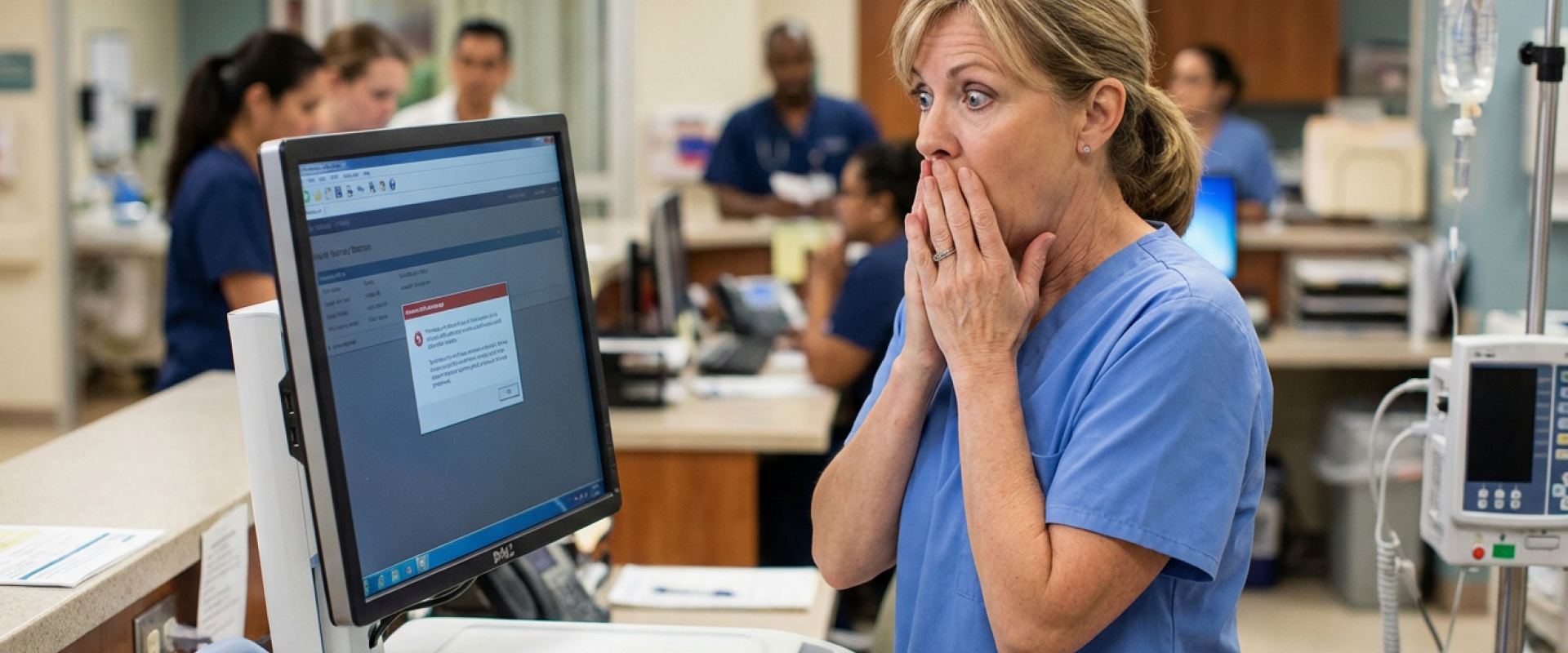
Your firewall is solid. Your antivirus is up to date. Your systems are patched. And yet, a single employee clicks a link in a convincing email — and your organization has a problem.
Phishing remains the most common entry point for cyberattacks on healthcare organizations, not because IT teams aren’t doing their jobs, but because phishing targets something no technical control can fully protect: human judgment under pressure.
Why Healthcare Is a Prime Target
Healthcare staff operate in high-stress, fast-paced environments where decisiveness matters. Attackers know this and design their tactics accordingly. A message that appears to come from a physician requesting urgent access to a patient file. A vendor notification about an overdue invoice. An IT alert warning that an account will be suspended if credentials aren’t verified immediately.
These messages are crafted to create urgency and bypass careful thinking. And they’re getting better. AI-generated phishing emails are increasingly indistinguishable from legitimate communications — free of the typos and awkward phrasing that staff have been trained to spot.
Healthcare is also a high-value target because of what’s at stake: PHI sells for significantly more on criminal markets than financial data, and a successful breach can yield thousands of patient records in a single compromise.
What “Good” Training Looks Like
Annual security awareness training is better than nothing. It’s also not enough.
Effective programs in healthcare share a few characteristics:
They’re ongoing, not annual. Threat tactics change. Training that happened once a year ago doesn’t reflect what staff are seeing in their inboxes today.
They use simulated phishing. Sending your own controlled phishing emails — and tracking who clicks — is the most reliable way to measure real-world readiness. It also creates a learning moment that’s far more memorable than a slide deck.
They’re specific to healthcare. Generic cybersecurity training doesn’t account for the scenarios healthcare staff actually encounter. Training that uses realistic healthcare-specific examples is more effective and more credible.
They normalize reporting. Staff who click on something suspicious often don’t report it out of embarrassment or fear. Creating a culture where reporting is encouraged — not penalized — is one of the most important things leadership can do.
Beyond Training: The Technical Layer
Staff training and technical controls work best together. A few things every healthcare organization should have in place:
- Email filtering that flags or quarantines suspicious messages before they reach inboxes
- Domain-based authentication (DMARC, DKIM, SPF) to reduce the effectiveness of email spoofing
- Clear reporting mechanisms so staff can flag suspicious emails with one click
- MFA on all systems so that even a compromised credential doesn’t automatically mean a successful breach
The Right Frame
It’s tempting to frame phishing prevention as a staff problem — people keep clicking things they shouldn’t. But that framing misses the point. Sophisticated phishing attacks fool smart, careful people. The goal isn’t to build a workforce that never makes mistakes; it’s to build an environment where a single mistake doesn’t become a catastrophic incident.
That means layered defenses, a strong reporting culture, and regular reinforcement — not a once-a-year checkbox.
If your organization’s security awareness program hasn’t been reviewed recently, now is a good time to take a closer look. The attackers are certainly keeping up with the times.
Contact us to learn more about how Abacus can support your organization’s efforts to be resilient to cyberattacks.